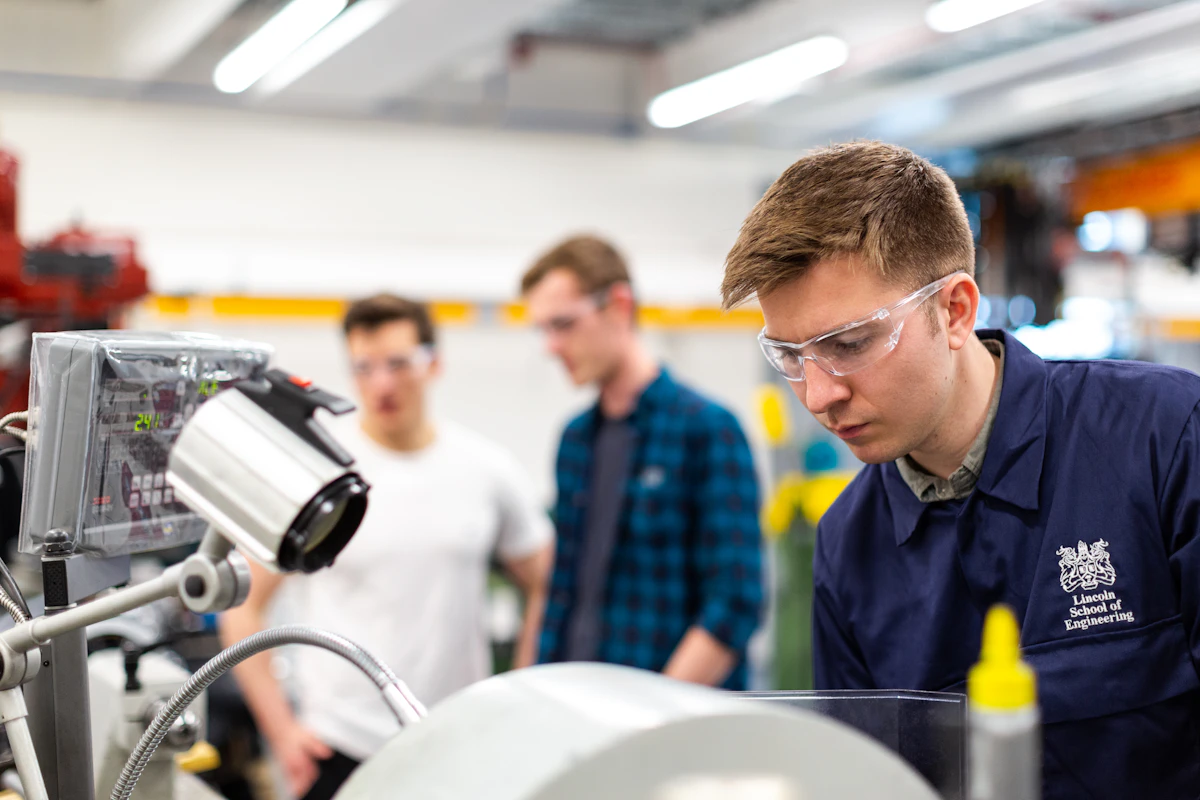
Hog Heaven — 2,400-Head Swine Facility Deep Clean
The inaugural Mess Quest episode: tackling massive biological muck, encrusted manure, and biosecurity sanitisation across a 2,400-head swine finishing barn.
Field Documentation.
Content Provenance: The video above is original Alkota archive footage. The technical analysis, application physics, and machine requirement breakdown below represent Alkota UK engineering commentary to help UK operators specify suitable commercial cleaning systems.
The Job.
In livestock farming, barn cleaning is not an aesthetic task — it is a strict biosecurity barrier. When a 2,400-head swine barn is cleared, every pen, slat, feeder, and wall is coated in compacted biological matter. The turnaround clock starts immediately: every hour the barn sits uncleaned delays the arrival of the next herd. The job requires moving immense volumes of solid waste while using elevated water temperatures to melt organic fats without damaging concrete integrity.
Livestock turnaround windows require rapid decontamination. Inadequate thermal sanitisation leaves pathogens that compromise biosecurity and herd health.
OPERATIONAL TAKEAWAY
Industrial cleaning is rarely about blast pressure alone. In severe environments, the speed of turnaround is directly dictated by sensible heat and volumetric rinsing power.
// APPLICATION SPECIFICATIONS
- Operating Environment
- Intensive Agricultural Swine Finishing Facility (2,400-Head Multi-Bay Barn)
- Primary Contamination
- Heavy biological manure, compacted straw chaff, urine scale, and fatty animal oils
- Access & Physical Constraints
- Slatted concrete flooring, pen partitions, narrow alleyways, and overhead ventilation fixtures
- Job Scale & Operational Impact
- Thousands of square metres of slatted floors and penning to turn around between livestock rotations
Why this clean is difficult.
Compacted Organic Fats & Muck
Dried swine waste contains dense organic proteins and fats that resist cold water. Cold water simply smears the grease and creates aerosolised mud without sanitising the underlying substrate.
Slatted Floor Drainage Constraints
Water must penetrate through narrow slatted concrete floor gaps into slurry storage without clogging nozzles or causing back-splash onto operators.
High-Volume Turnover Window
Operators face multi-hour continuous wash cycles. Equipment must maintain full thermal output and pump pressure non-stop across full 8-to-12 hour cleaning shifts.
Chemical & Detergent Compatibility
Agricultural sanitising detergents need adequate foaming and dwell time before high-temperature rinsing to ensure complete microbial clearance.
The engineering behind the clean.
Agricultural decontamination relies on a precise balance of sensible heat to liquify organic fats, high water volume (L/min) to displace bulk solids, and sustained industrial duty cycles.
HEAT (80°C – 95°C)
Fat & Lipid Liquefaction
Hot water breaks down animal fats and organic residues immediately on contact, reducing wash time by up to 60% compared to cold water.
FLOW (15 – 25 L/MIN)
Bulk Waste Transport
While pressure cuts through crusted matter, high volumetric flow is what carries hundreds of kilograms of solid waste down through the slatted floors.
PRESSURE (180 – 240 BAR)
Surface Impingement
Sufficient kinetic energy to strip hardened deposits from rough cast concrete without etching or pitting the structural surface.
DUTY CYCLE (Continuous)
Multi-Hour Thermal Reliability
Schedule 80 steel coils and slow-turning triplex pumps ensure the burner and hydraulic system do not overheat during all-day washdowns.
The Alkota Cleaning Equation.
200+ BAR
Concrete blast force
Kinetic blast impact at substrate surface
18–25 L/MIN
Solid muck displacement
Volumetric flushing & material displacement
85–95°C
Animal fat liquefaction
Thermal breakdown & grease liquefaction
Agricultural Sanitiser
Pathogen clearance
Surfactant bond cleavage & saponification
Rapid Turnaround
Dwell & rinse efficiency
Chemical dwell & thermal soak duration
Agricultural barn cleanouts demand maximum Heat and Flow to melt grease and transport bulk matter, backed by robust chemical foam application.
What does a job like this demand?
Before choosing a specific model, consider the structural and thermodynamic requirements of this class of cleaning. The demanding duty cycles seen in Mess Quest reveal why commercial-grade components outperform consumer pressure washers.
Schedule 80 Hot Water Heating Coil
Continuous thermal performance up to 95°C is essential to melt organic greases without burner lockout.
High-Volume Ceramic Triplex Pump (15–25 L/min)
Displacing dense agricultural sediment requires high water volume, not just pinpoint pressure.
Corrosion-Resistant Steel Frame & Mobility
Ammonia-rich barn environments rapidly corrode cheap sheet metal; heavy-gauge powder-coated steel chassis is mandatory.
Detergent Chemical Foaming System
Pre-foaming agricultural detergents allows active agents to penetrate crust before hot water pressure rinsing.
Suitable Alkota UK Systems.
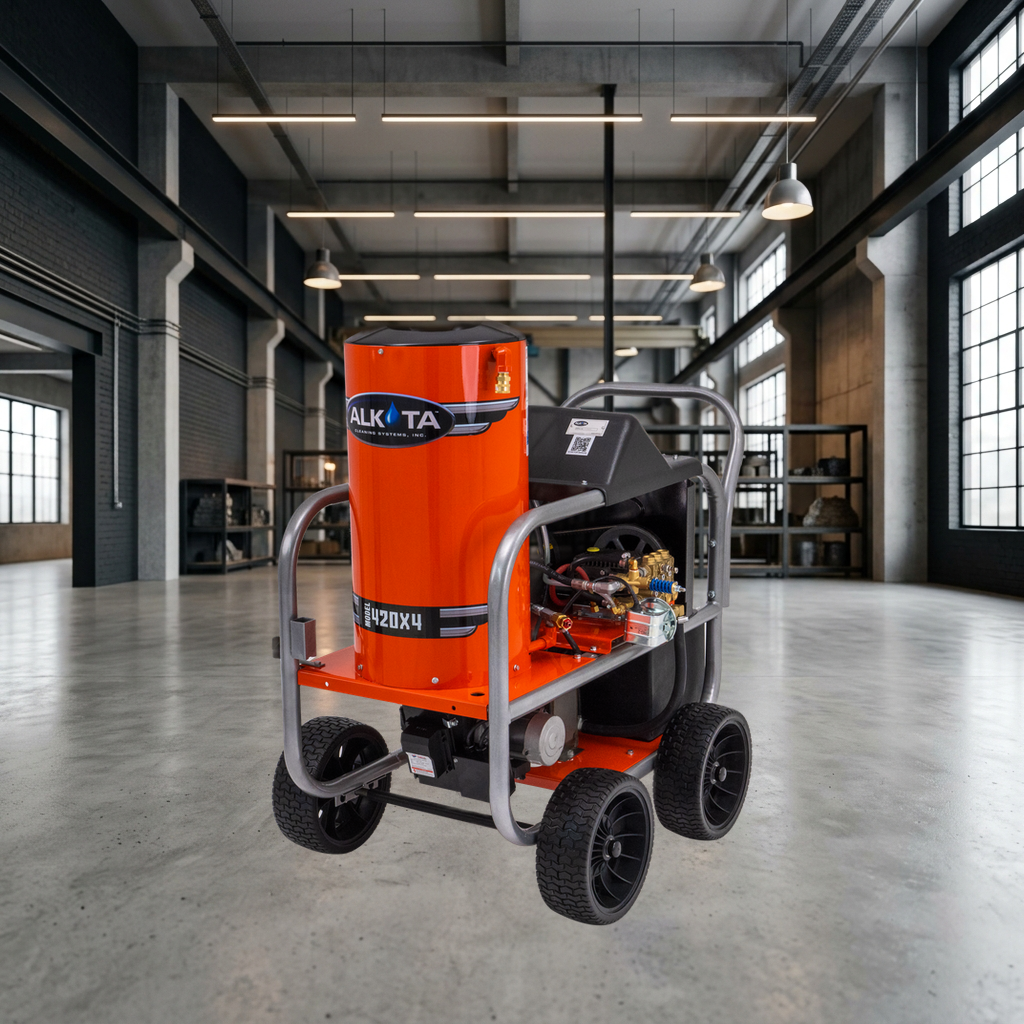
Alkota 420X4
Alkota 420X4 is an industrial-grade hot water cleaning system engineered in South Dakota by Alkota and built for the demanding conditions of UK commercial and industrial operators. Delivering 138 bar (2000 PSI) at 13.2 L/min (3.5 GPM), it features Alkota's signature heavy-gauge welded chassis and precision-engineered oil bath crankcase | triplex ceramic plunger.
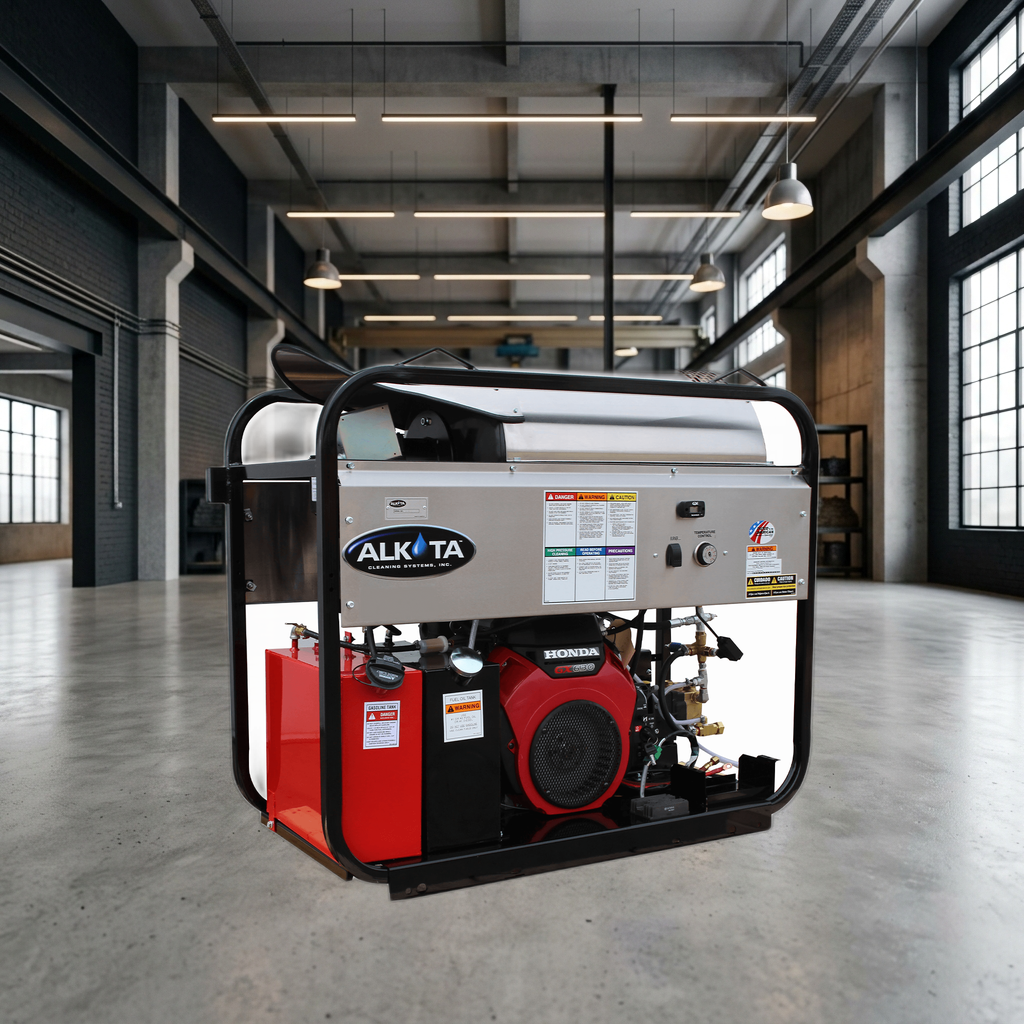
Alkota 5355ENS
Alkota 5355ENS is an industrial-grade hot water cleaning system engineered in South Dakota by Alkota and built for the demanding conditions of UK commercial and industrial operators. Delivering 241 bar (3500 PSI) at 18.9 L/min (5 GPM), it features Alkota's signature heavy-gauge welded chassis and precision-engineered oil bath crankcase|triplex ceramic plunger.
Chemistry Matters.
In intense livestock environments, specialised alkaline detergents and biosecurity sanitisers break the surface tension of dried proteins before thermal pressure rinsing.
// Essential Cleaning Accessories
- Rotary Turbo Nozzle (0° Impact at 25° Cone) →
Maximises kinetic strip force on encrusted concrete floors.
- Long-Reach Insulated Lance & Swivel →
Operator ergonomic comfort during high-temperature all-day washing.
- Heavy-Duty Chemical Foam Cannon →
Lays thick clinging foam across pen walls for maximum dwell time.
Build a rig for this kind of work.
Configure water capacity, washer performance, live hose management, onboard generator power, and dual-operator capability around your specific application.
Configure a Trailer SystemThis is where bespoke starts.
A cleaning system should be engineered around the job rather than forcing the job around an off-the-shelf machine. Talk to our UK engineering team about custom flow rates, multi-operator manifolds, and closed-loop wash bay recycling.
Discuss a Bespoke SolutionBig Red — Heavy Plant & Industrial Greasing Overhaul
Municipal Water Tower — 135-Ft Elevated Tank Restoration
Explore More Mess Quest.
View All Episodes → EPISODE 02
Municipal Water Tower — 135-Ft Elevated Tank Restoration
Extreme height, severe vertical atmospheric fallout, and industrial biological algae stripped from a 135-foot municipal water tower structure.
 EPISODE 03
Big Red — Heavy Plant & Industrial Greasing Overhaul
Deep thermal degreasing and hydraulic oil decontamination across heavy quarrying and earthmoving plant machinery.