
INDUSTRIAL CLEANING.
ENGINEERED AS
INFRASTRUCTURE.
Bespoke industrial wash systems engineered around the asset, contamination, throughput, site and water strategy — with installation, commissioning and lifecycle support from one team.
The machine is only one part of the system.
A pressure washer is an individual tool. An industrial wash plant is a process infrastructure asset: combining heavy mechanical reticulation, thermal water generation, automated sequencing, civils interfaces, solids evacuation, oil separation, water recycling, and long-term asset management.
A successful installation is engineered around what must be cleaned, what is attached to it, how quickly it must move through the process, where the contaminated water goes, and how the plant will be operated and maintained.
We design systems from first principles — calculating asset geometry, cycle dwell time, effluent loading, and power constraints to guarantee operational continuity and statutory environmental compliance.
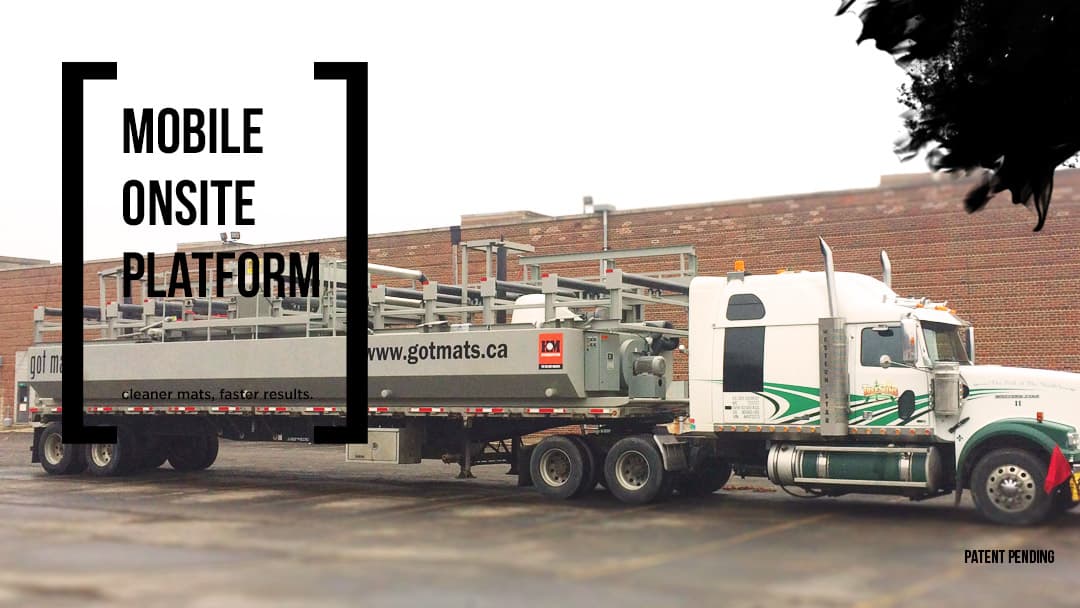
Six Design Inputs. One Cohesive System.
In an industrial wash plant, no engineering decision exists in isolation. Changing any single operational parameter shifts the hydraulic sizing, civils interfaces, automation level, and water treatment requirements.
Asset Profile & Geometry
Asset dimensions, envelope, sensitive components, mechanical clearance, and surface metallurgy.
Dictates wash bay clearance, gantry dimensions, nozzle standoff distances, and mechanical conveyor payload capacity.
Underbody clearance and surface blind-spots determine whether fixed spin-bars, oscillating arches, or manual lance stations are required.
One cleaning problem does not have one wash plant solution.
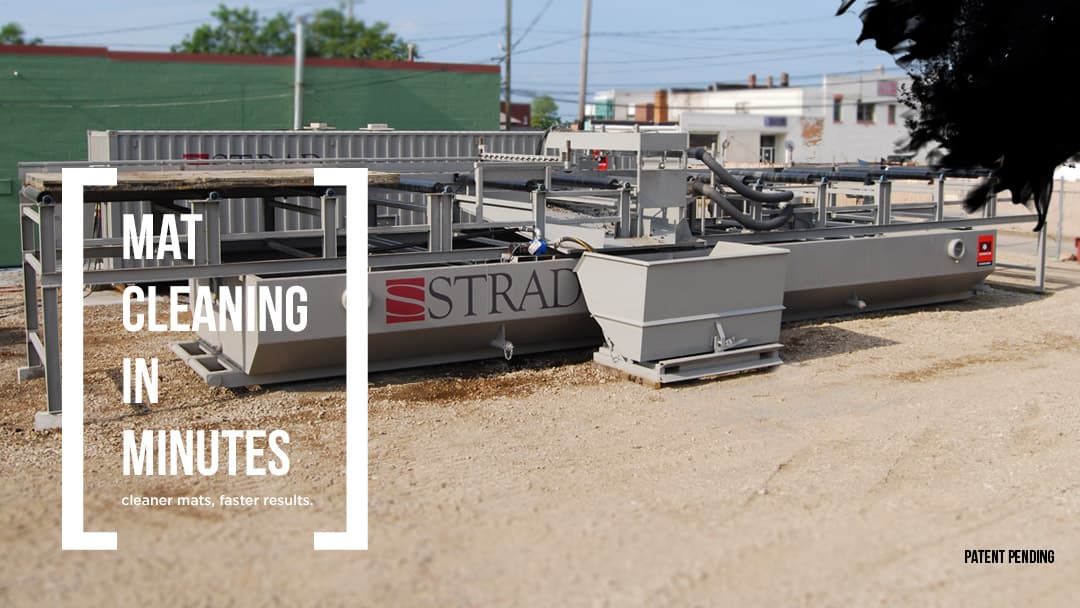
Conveyorised Cleaning Tunnel
Heavy mechanical handling with 360° synchronized high-pressure cleaning.
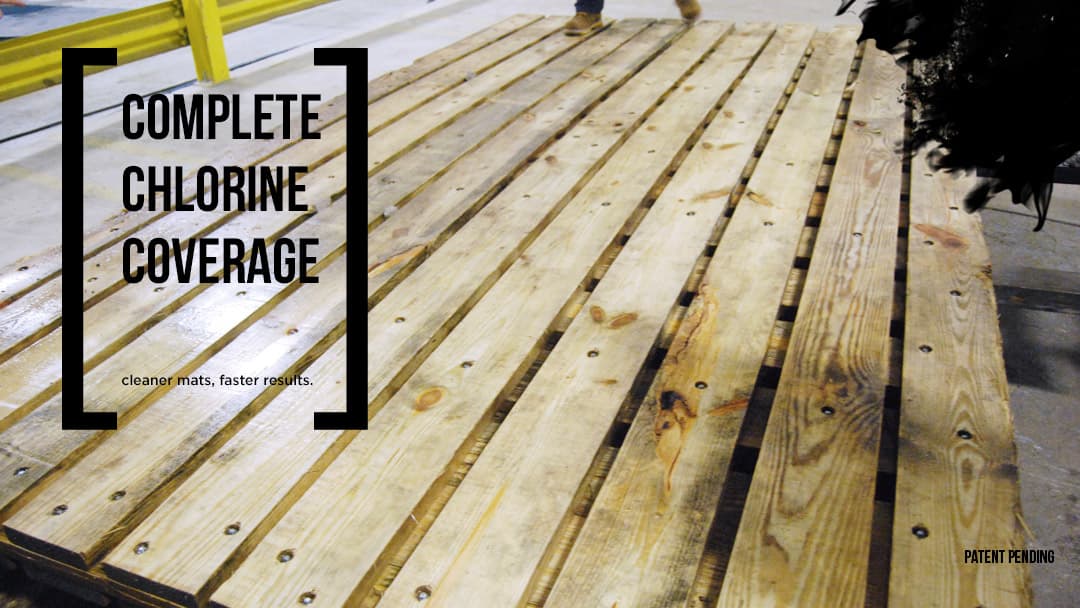
Rig & access roadway mat hire depots, sheet pile yards, modular building components, and repetitive planar assets.
High-volume repetitive cleaning of heavily soiled planar assets required back-to-back at industrial throughput.
Variable-speed mechanical conveyor drives assets through enclosed spray chambers equipped with 20+ synchronized rotating spray bars.
Dual 1,000,000 BTU thermal heating skids, 100% closed-loop media sand recycling, and automated de-silting augers.
Precision.
Under pressure.
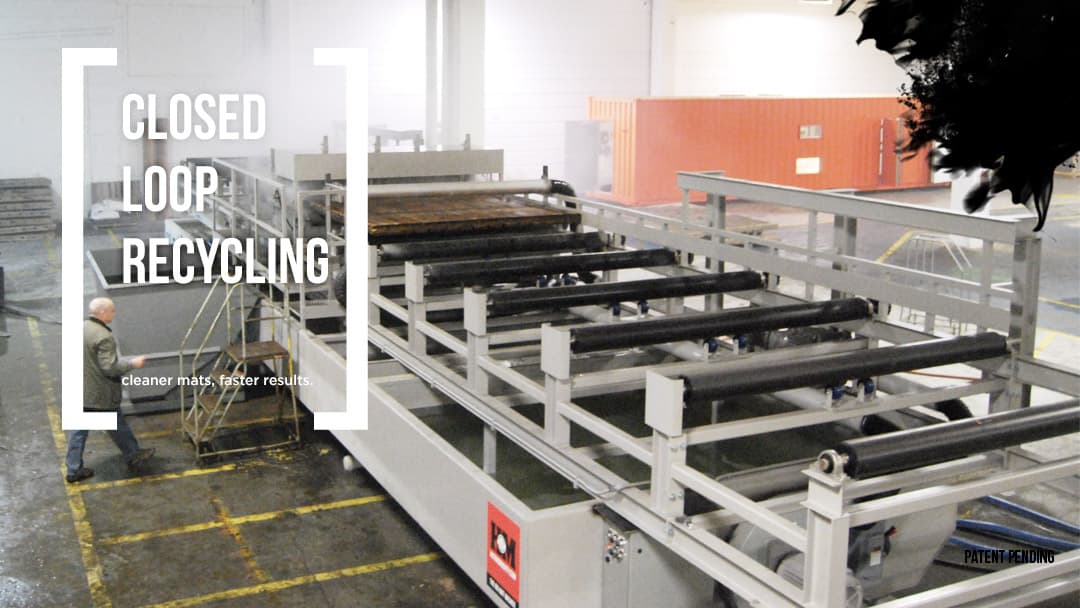
Anatomy of an Industrial Wash Plant.
The washing process and the water treatment stream are designed as a single continuous hydraulic cycle. Select any station below to inspect its operational role and engineering parameters.
Hot-Water / High-Pressure Primary Wash
Continuous-wound Schedule 80 heating coils deliver hot water (up to 85°C) or wet steam (150°C) at 150–200 BAR.
Breaks hydrocarbon bonds, dissolves grease, and emulsifies road film across all external surfaces.
Water stream carries emulsified oils and dissolved contaminants into the bay drainage and water recovery system.
Start with the process.
Industrial wash plants are engineered capital projects. The Wash Plant Architect captures the primary engineering inputs needed to understand your application before a site survey or concept design.
Structure your asset dimensions, throughput rates, contamination profile, site constraints, and water strategy into an actionable project brief. No premature sales pressure; only structured engineering definition.
Automate what creates value.
Modern industrial wash plants operate as integrated process control systems. We design electrical and automation architectures utilizing industrial PLCs, variable speed drives, optical profiling sensors, and safety interlocks.
Where specified, wash systems are delivered remote monitoring capable and data-ready — structured to accommodate telemetry for operating hours, cycle counters, filter differential pressures, and predictive maintenance alerts.
Water is a process stream.
A wash plant does not simply consume water; it manages an entire effluent cycle. From primary sediment settlement and coalescing oil separation through deep-bed media filtration, we engineer water treatment systems that enable closed-loop recirculation or statutory trade effluent compliance.
Actual water treatment scope is engineered around site soil chemistry, local water authority discharge consents, and operational recovery objectives.
Impermeable graded concrete aprons and heavy galvanized sumps with silt catchbaskets prevent uncontrolled runoff.
Gravity settlement weir chambers and automated screw augers drop out heavy gravel, aggregate, and clay.
Class 1 oleophilic coalescing plate packs separate free hydrocarbons to meet UK trade effluent standards.
Pressurized multi-media filter vessels remove suspended solids for closed-loop pump protection and recirculation.
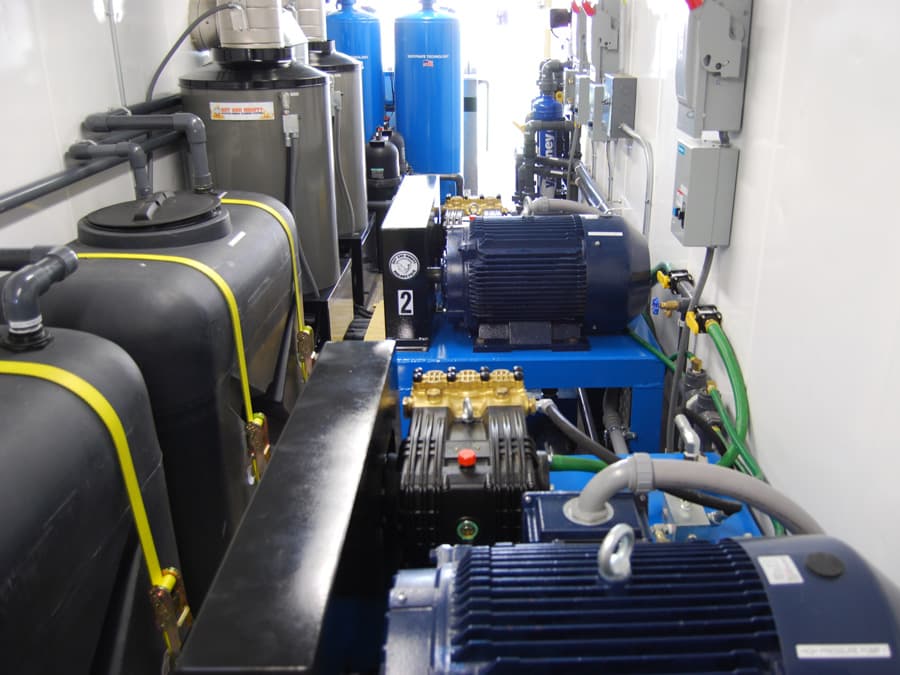
From site survey to commissioning.
Every major capital installation follows our six-phase engineering delivery framework.
Application & Operational Discovery
We evaluate the asset envelope, contamination profile, target cycle time, operator model, and business objectives from first principles.
Engineered & installed by Alkota UK
Project Archive →Engineered installations.
Case studies are compiled with client authorisation.
Each installation we commission involves confidential site, operational, and commercial data. We do not publish project case studies without the express approval of the client organisation.
If you are evaluating Alkota for a capital wash plant project, our engineering team can provide relevant project references on a confidential basis during your appraisal process.
Commissioning is the start of the asset life.
Three commercial service lines supporting your wash plant before, during, and for decades after installation.
Service & Maintenance
Planned preventative maintenance, rapid emergency response, pump overhauls, combustion tuning, and multi-manufacturer support for all third-party industrial wash plants.
Asset Management
Digital 5-level component registers, 45-point maintenance inspection scopes, condition grading, replacement forecasting, and data-ready telemetry integration.
Refurbishment & Upgrades
Targeted engineering overhauls on existing live wash sites: pump swaps, PLC migrations, water recycling retrofits, and automation upgrades without plant replacement.
Preparing a capital project or formal tender?
We work directly with Engineering Directors, Operations Managers, M&E Consultants, and Principal Contractors. We provide hydraulic sizing calculations, process flow diagrams, trade effluent advice, and CAD interfaces.